

Comptroller Englman estimates: "Once we receive full cooperation from all audited entities, we will be able to publish reports on the core issues within approximately a year". The second part of the exclusive interview
The initial months following the October 7 massacre were dedicated by State Comptroller and Ombudsman Matanyahu Englman to a marathon of field visits. The comptroller and his office staff toured communities in the Gaza Envelope, the western Negev, the Galilee, the Golan Heights, and along the Seam Line (border area along the Green Line). They met with residents evacuated from the south and north, as well as with local leaders and officials trying to operate under the impossible reality imposed on Israel.
In the first part of this interview, published here, Comptroller Englman shared his impressions from these visits.
On November 13, 2023, about a month after the massacre, the State Comptroller sent a letter to the Prime Minister warning of a long list of failures he had encountered during his visits, failures that required immediate resolution. “We continue to experience the significance of these visits to this day", Comptroller Englman now says, "with the understanding that we are the only objective and independent body examining the failures of October 7 and scrutinizing all levels – political, military, and civilian".
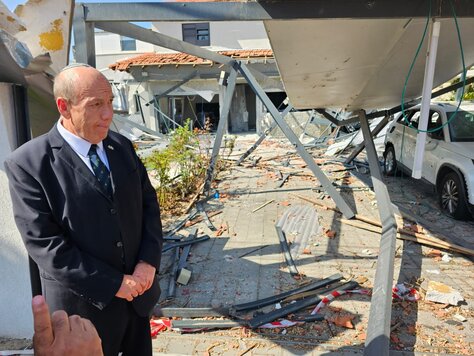
Comptroller Englman near a house destroyed by a missile strike in Ashkelon
What really happened?
After three months of intensive field visits, you published the framework for the audits related to the Swords of Iron War. There are so many issues that need to be examined. Where do you start? What were the first reports you wanted to release to the public?
"From the outset, our intent was to focus on the failures of October 7 at all levels—political, military, and civilian—in order to provide the Israeli public with answers to the pressing questions on their minds: What really happened on October 7? How was the strategic concept that collapsed that day constructed? How did we reach such a severe intelligence failure? And once it happened, how is it possible that the forces responsible for protecting Israeli citizens, particularly the military, did not arrive during the long hours in which the terrorists massacred, abducted, and raped almost without resistance? Who is accountable for these failures?".
"At the same time, I was aware from the very beginning that this is an extremely complex event to audit – especially with the military, one of the main entities under review, actively engaged in combat".
How did you navigate this complexity?
"In January 2024, we formulated a multi-phase audit plan. In the short term, we chose to focus on issues that could be audited at that time. For example, the government’s response to evacuees and the general population in areas such as healthcare, welfare, and education; the formulation of war budgets; economic support for reservists; assistance for students; and several other issues that are highly relevant to Israeli citizens".

Comptroller Englman at a bomb shelter in Maalot Tarshiha near the northern border
A complex challenge
From the moment the State Comptroller announced the audit framework, efforts began to obstruct—or at the very least, delay—the state audit from fulfilling its legal mandate. These attempts culminated in a petition to the High Court of Justice aimed at halting the audit of the military and security leadership. The petition was joined by the IDF and the General Security Service (Shin Bet), with the backing of the Attorney General. This, despite the law explicitly stating that the Comptroller has the authority to examine any matter related to any audited body, at any scope and timing of their choosing.
When you presented the audit framework, did you anticipate such a backlash?
"No. I follow the law and audit many different entities, and I expect all of them to do the same. Conducting an audit during wartime is indeed complex. I can understand the concerns; they are clear to me. However, a dichotomous approach like that taken by the Chief of Staff—stating that there is no room for any audit of the IDF on any matter until the war is over—is unacceptable".
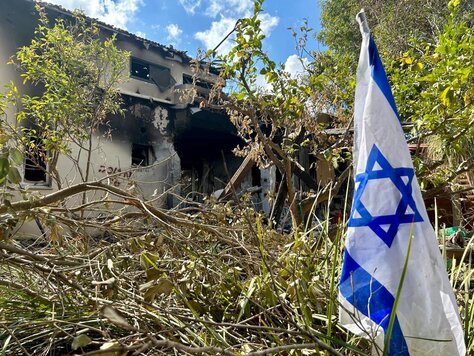
A house destroyed in Kibbutz Be'eri during the October 7 attack
"We will name those responsible"
Are the political leadership and other security agencies fully cooperating with the State Comptroller’s Office?
"Most of them are. The Cabinet Secretary approached me immediately after we announced the launch of the audit and requested a six-month delay. I refused. It is crucial that Israeli citizens receive the answers they deserve as soon as possible. To the political leadership’s credit, when I refused the request for a postponement, they accepted my decision. It wasn’t easy at first, but obstacles have been removed, and we are receiving the documents and materials necessary for the audit".
Is it fair to say that the audit of the political leadership, including the prime minister, will take place alongside the audit of the military leadership?
"Everyone is subject to the state audit equally – political, military, and civilian leadership. We've said this from the start, and that's exactly how we're conducting the audit. There are no restrictions on any aspect of the audit, and in the reports we publish, we will name those responsible for the failures. I believe the scope of issues we are currently examining regarding the conduct of various levels of leadership is greater than anything the State Comptroller’s Office has ever investigated before."
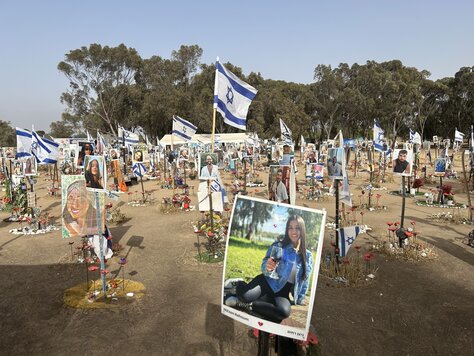
The memorial site for the victims of the Nova music festival massacre
Getting to the core issues
How do you view the progress of the Swords of Iron audit reports towards their completion in terms of timelines and the degree of cooperation from the audited entities?
"The ones who suffer from the delays and the unwillingness to cooperate with the audit are, first and foremost, the citizens of Israel, especially those who lost loved ones on October 7. When you hear their outcry—that they want to know what happened and what could have been done better—you realize how critical it is to complete the audit in order to provide them with answers from an independent and impartial authority".
"Once we receive full cooperation from all audited entities, I estimate that we will be able to complete the audit on the core issues within approximately a year".
"At the same time, over the coming year, we will publish a series of reports concerning the home front. The findings in these reports matter not only to those who were affected and displaced from their homes, but to the entire Israeli public as well. The audited entities must address the identified shortcomings in order to ensure better preparedness for future emergencies".

Comptroller Englman at his office in Jerusalem
Enhancing accountability
What will you do if and when a state commission of inquiry is established?
"I will do what I did after the Meron disaster. Then too, I announced that I would launch an audit into the failures that allowed the disaster to occur. Once a state commission of inquiry was established, I met with its chair, the late Justice Miriam Naor, to coordinate efforts and establish clear boundaries. A future commission of inquiry could certainly rely on the findings of the audit in its work".
"In fact, the State Comptroller’s audit could even help facilitate its establishment: The State Comptroller Law explicitly states that once a special report has been submitted, the Knesset’s State Control Committee may use it as a basis for discussing the appointment of a state commission of inquiry".
"It is important to understand that the State Comptroller’s audit and commissions of inquiry are two separate mechanisms, each operating under its own legal framework. I do not believe that one should come at the expense of the other. In Israel, we have a bad habit of dealing with things that are not our responsibility while neglecting those that are. I make a point of focusing on what I am entrusted with rather than explaining why we cannot do certain things. I believe that everyone should fulfill their responsibilities within the domain they are entrusted with".