

The State Comptroller and Ombudsman, Matanyahu Englman, is publishing a special report by the Office of the Ombudsman on the complaints received during Operation Rising Lion: "The most significant gap arising from the complaints – the absence of an integrating party for the handling of the citizens"
The State Comptroller and Ombudsman, Matanyahu Englman, published today (10.9.2025) a special report regarding complaints from the public concerning the state authorities' conduct vis-à-vis the home front during Operation Rising Lion.
This report is Special Report No. 2 by the Office of the Ombudsman at the Office of the State Comptroller connected to the war. The first report was published in December 2023 and dealt with complaints received by the Office of the Ombudsman during the first weeks of the Swords of Iron War.
Hotline for fast assistance
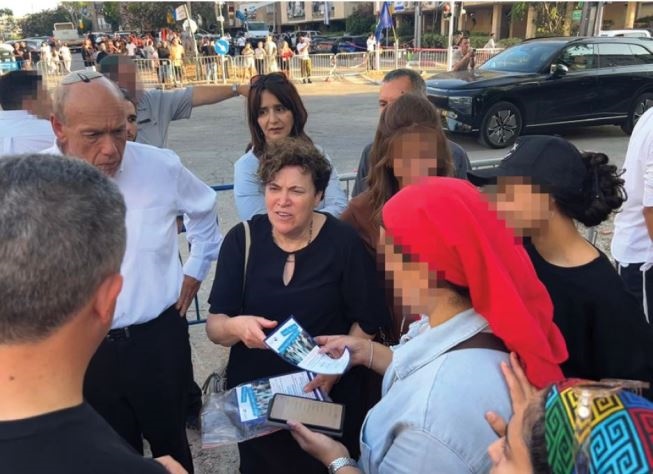
As soon as Operation Rising Lion was launched, the State Comptroller and the Ombudsman, the Director General of the Office of the State Comptroller Brig. Gen. (Res.) Yishai Vaknin, the Director of the Office of the Ombudsman Adv. Carmit Fenton, and staff members from the office, began to tour the sites hit by missiles, hospitals and evacuee hotels.
The aim of the tours was to examine at close range and in real time how the government bodies were dealing with the damages caused, to gain a direct impression of the scope of the damage to the buildings, and to hear from the residents their distress and feelings in view of the severe situation forced upon them following the missile fire.
The Office of the Ombudsman also operated a hotline designed to act as a convenient and fast tool for receiving complaints from people adversely affected by the state of emergency and who are finding it difficult to realize their rights. The Office's employees who manned the hotline received from the callers complaints against the public bodies, provided them with initial assistance in realizing their rights, gave them information that they were lacking, and, if needed, directed them to the appropriate public bodies and guided them as to how to apply to them. Response at the hotline was given to those calling it by telephone and WhatsApp and in various languages, such as Arabic, Russian, Amharic, French and English. About 530 calls were received at the hotline during the operation.
The Office at the evacuee hotels
The Office's staff set up public reception stations in 28 hotels and guesthouses where evacuees were staying. There they met with the residents who had been caught in a double predicament – due to the damage to their property and due to the difficulty in navigating the bureaucratic tangle and understanding what their rights are.
Many of them had experienced a feeling of helplessness after they had fallen through the cracks and sometimes they had not succeeded in reaching the appropriate parties in the public bodies by their own efforts.
The Office of the Ombudsman's employees who went to the evacuee centers assisted in real time in providing a response, in unraveling the bureaucratic tangle and in exhausting the rights of the evacuees who applied to them. The Office's employees also received complaints from evacuees who had not succeeded in realizing their rights.
During the period covered by the report (13.6.25 - 14.7.25), the Office of the Ombudsman's employees received about 700 inquiries connected to the state of emergency following Operation Rising Lion. In some of the inquiries, the applicants were given direction and guidance regarding applying to the appropriate bodies, and in some of the inquiries they were given the information they were missing. 303 complaint files were opened following the inquiries received.
51.7% of the complaints that the Office of the Ombudsman was qualified to investigate were rectified.
The bodies that were the subject of the largest number of complaints:
- The Israel Tax Authority (the Compensation Fund – Property Tax)
- The Bnei Brak Municipality
- The Bat Yam Municipality
The main subjects of the complaints:
- Protection of the home front (the proper working order of the bomb shelters and protected spaces)
- Compensation for the damages caused by the war (the Compensation Fund – Property Tax)
- Service to the pubic (for example, the method of dealing with inquiries)
- Handling of the evacuation and the evacuees
The largest number of complaints was received from the following localities:
- Bat Yam
- Bnei Brak
- Petah Tikva
- Be'er Sheva
The Comptroller and Ombudsman Matanyahu Englman and the Director of the Office of the Ombudsman Adv. Carmit Fenton in a neighborhood in Ramat Gan that was hit during the missile attack
"We should have been prepared in advance"
"Alongside the defensive importance of Operation Rising Lion, the State of Israel is required to overcome the civilian difficulties: Both of residents who have been directly hit by the missile fire and evacuated to hotels, and of the general public, which have dealt with various challenges during the course of the operation", said Comptroller and Ombudsman Englman.
"When the government is aware that an operation is imminent, it should have prepared itself in advance for the civilian aspects of the operation as well, in order to make it as easy as possible for the citizens. The significant gap that arose from the tours we conducted and from the handling of the complaints received at the Office of the Ombudsman is the absence of an integrating party to manage all the activities of the state authorities concerning the handling of citizens adversely affected by the state of emergency".
"We are publishing the report after the publication of a report last week regarding the government's failures in the management of the civilian aspects of the Swords of Iron War. The Prime Minister and the ministers must regulate the handling of the citizens of the State of Israel during times of emergency".